If you’re trying to tighten food safety, cut waste, and keep inventory costs predictable, the conversation usually starts with FIFO vs. LIFO in food storage for restaurants. You’ll hear these terms in accounting and purchasing meetings, but the real win (or loss) happens in the walk-in, on the line, and during receiving.
In plain terms, FIFO vs LIFO food storage methods describe how product moves through your kitchen: which items get used first, how you rotate stock, and how reliably your team tracks dates.
Operationally, one method aligns with food safety and quality expectations far better than the other. Financially, they’re also discussed as inventory valuation methods—but valuation concepts don’t always translate into smart kitchen habits.
This 2026 operations guide breaks down LIFO vs FIFO inventory for restaurants the way a working inventory consultant would: clear definitions, what actually happens on shelves, where teams make mistakes, and how to roll out a rotation system that sticks—without slowing service.
FIFO and LIFO definitions (and why kitchens care)
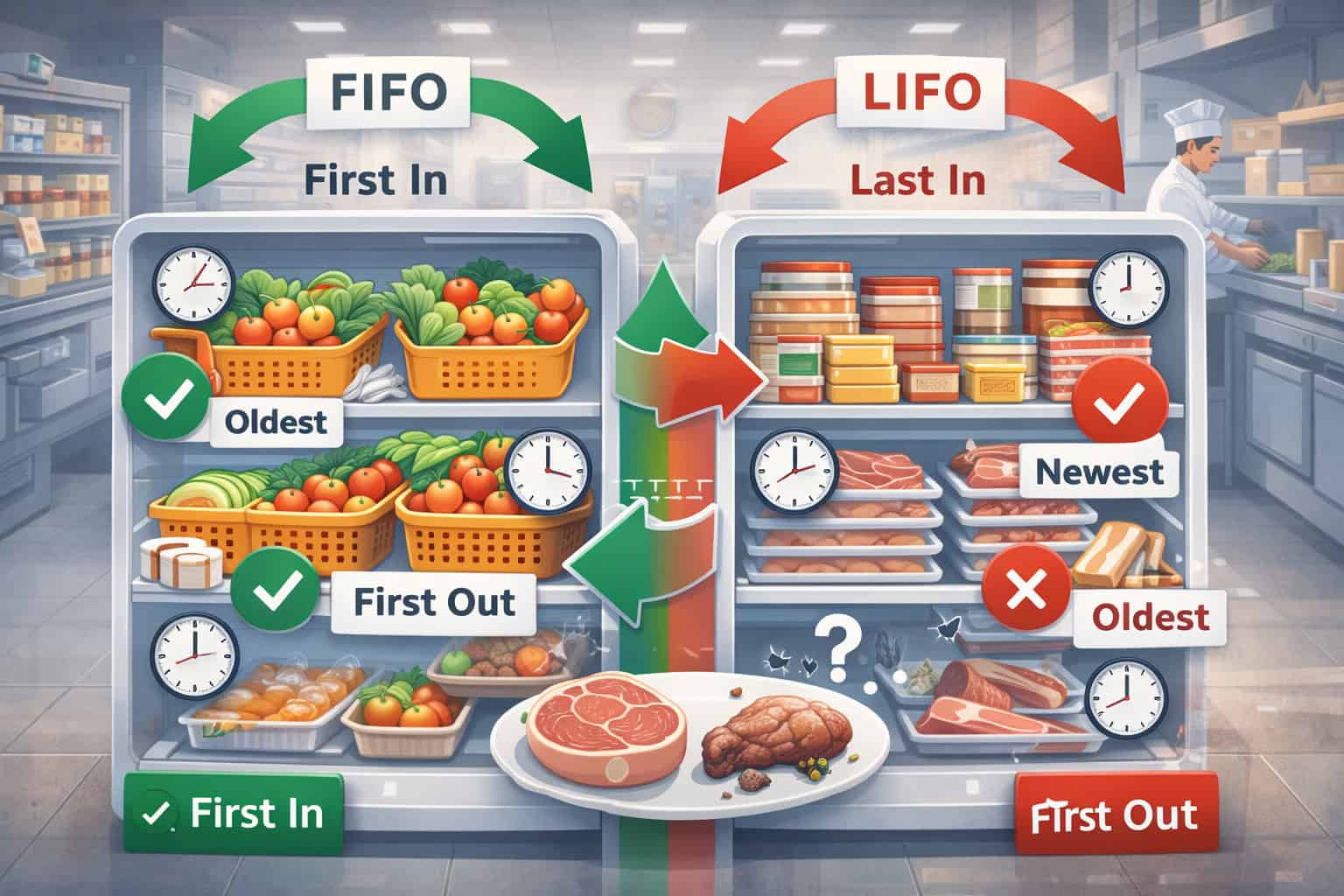
What FIFO means: the first in, first out method
The first in first out method (FIFO) means the oldest product—based on receipt date or prep date—gets used first. In a restaurant, FIFO is less about fancy theory and more about a kitchen stock rotation system that protects guests and your margins.
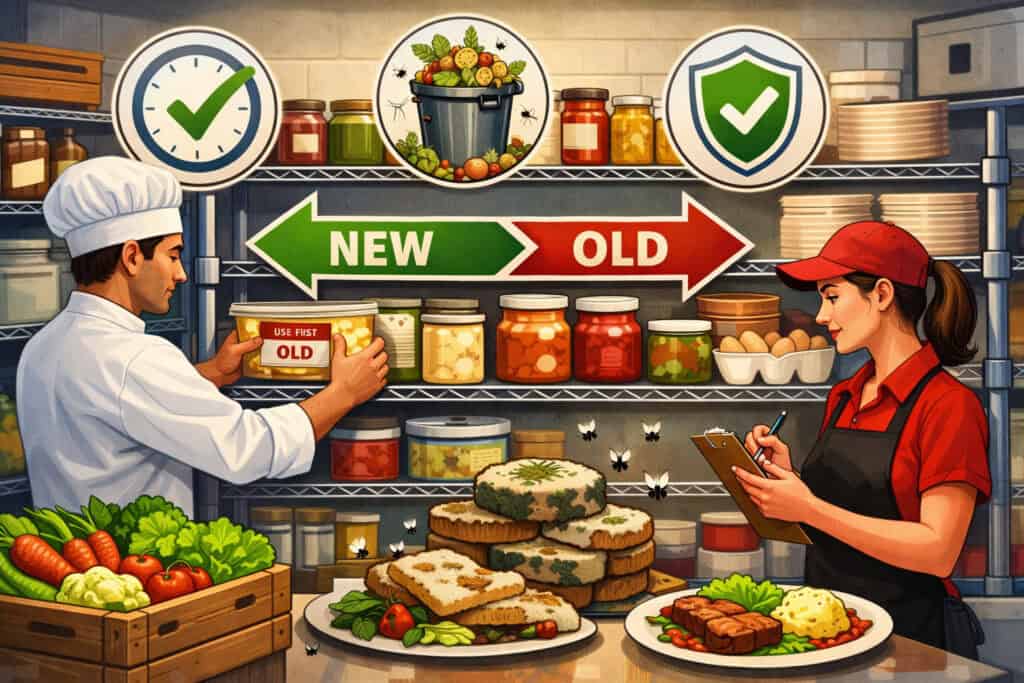
When you receive a new case of items, you place it behind existing stock so the older product stays in front and gets pulled first.
Operationally, FIFO is the backbone of food inventory rotation. It supports expiration date tracking, reduces the chances of “mystery containers” lingering in the back of the cooler, and prevents the quiet creep of spoilage.
It also fits naturally with food labeling and date marking standards: when everything is dated and rotated, the next move is obvious even on a slammed Friday night.
FIFO also helps managers make smarter purchasing decisions. When rotation is consistent, you can trust counts, set accurate par levels and reorder points, and measure your inventory turnover rate without constant “we found a case hidden behind the pickles” surprises.
What LIFO means: the last in first out method
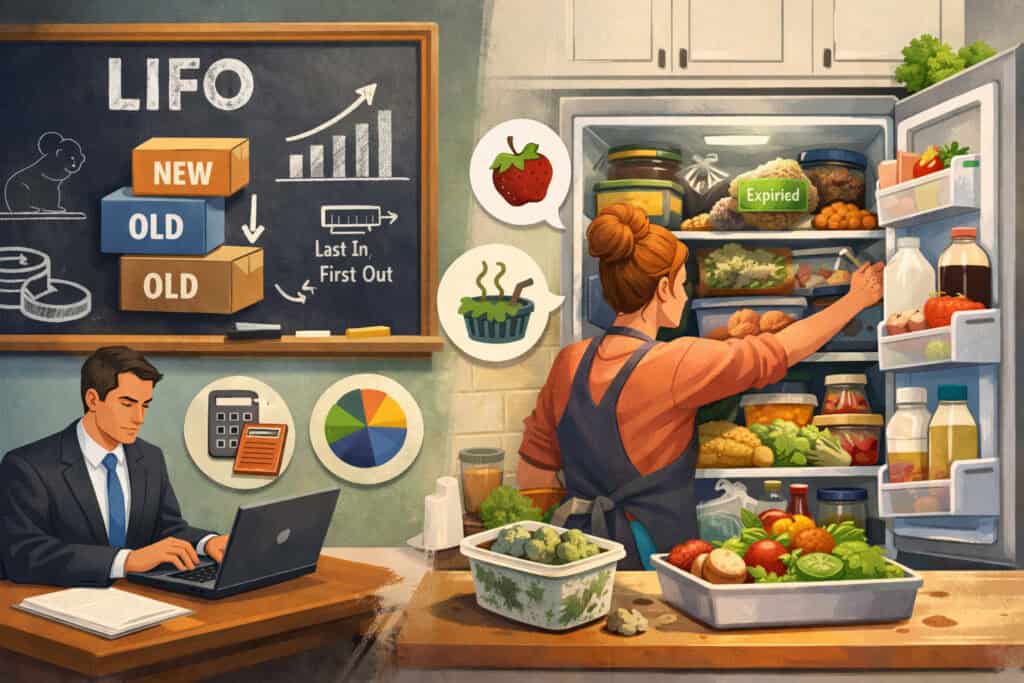
The last in first out method (LIFO) means the newest product gets used first. In a kitchen, that often happens accidentally: a new delivery gets placed in front because it’s easier, or the team grabs the freshest-looking item because it’s right there.
That’s “practical LIFO,” and it creates a predictable problem—older products get stranded until it’s expired, questionable, or tossed.
It’s important to separate LIFO as a valuation concept from LIFO as a physical workflow. In operational terms, LIFO increases the odds of:
older items sitting too long
inconsistent date checks
higher spoilage risk
surprise shrink in weekly inventory
Some teams assume LIFO is “fine” if the product is moving quickly. But speed isn’t a system. The moment sales dip, weather shifts, a menu item changes, or an event cancels, LIFO exposes you—because the oldest product is still sitting there.
Why both are inventory valuation concepts, but differ operationally in kitchens
In finance, FIFO and LIFO can refer to how you assign costs to inventory for reporting—again, inventory valuation methods. That’s a ledger decision. In the kitchen, FIFO or LIFO describes physical flow: how you store, label, rotate, and use product during daily service.
Here’s the key: food safety compliance and guest quality depend on physical rotation, not accounting treatment. Kitchens live in the real world of temperature swings, cross-contamination risks, and short shelf life. That’s why operational systems should prioritize:
food storage best practices
clear expiration date tracking
reliable perishable inventory control
consistent labeling and rotation behavior
When your physical workflow matches your labeling rules, your team doesn’t have to “think hard” to do the right thing. They just follow the shelf logic—and you stop bleeding money through hidden spoilage.
FIFO vs LIFO comparison for restaurants: food safety, waste, and cost control
Rotation is one of those simple-sounding habits that either runs quietly in the background or causes constant fires. The easiest way to see why FIFO is preferred is to compare outcomes in the places restaurants feel pain most: safety risk, waste, and costs.
Older items used first; stronger expiration date tracking and date checks
Older items get buried; higher risk of expired or questionable product
Product quality
More consistent freshness; fewer “off” flavors/textures
Quality varies; older product may be used late or discarded
Food spoilage prevention
Supports routine rotation and earlier use of aging items
Encourages “fresh grab,” leaving older items to spoil
Reducing food waste in restaurants
Typically lowers waste by preventing stranded inventory
Typically increases waste via hidden/forgotten product
COGS (Cost of Goods Sold) control
More predictable usage and depletion patterns
More variance; surprise shrink during counts
Operational simplicity
Clear shelf rules; easier training
Requires extra vigilance to avoid burying older stock
Best fit for perishables
Strong fit
Poor fit
Best fit for stable dry goods
Good fit
Sometimes happens accidentally; still not ideal
What matters isn’t the label “FIFO” or “LIFO.” It’s the operational behavior each one creates. FIFO creates visibility and routine. LIFO creates blind spots.
FIFO is usually recommended because it aligns with how food behaves over time. Even when an item doesn’t look “bad,” quality declines. Flavor fades, textures change, and the risk profile shifts. FIFO reduces both safety risk and the operational chaos of surprise spoilage.
Why FIFO is typically recommended in food storage for restaurants
FIFO improves food safety compliance and day-to-day discipline
Food safety isn’t only about temperatures. It’s also about food labeling and date marking, using products within safe windows, and preventing cross-contamination during storage. FIFO helps by turning your cooler into a “timeline.”
When an older product is always in front and clearly labeled, your team naturally checks dates more often—because the dates are visible.
A solid FIFO routine supports:
consistent pulling of the oldest product first
fewer expired items found during inspections
easier investigation when something seems off (“Which batch was it?”)
better alignment between prep logs and storage shelves
FIFO also reduces the temptation to “make it work” with borderline product. When older items are used on time, you aren’t stuck deciding whether something is still acceptable.
FIFO supports expiration date control and predictable quality
“Expiration” is messy in real kitchens. Some items have manufacturer dates, others have quality windows, and prepped items depend on your operation’s rules. FIFO creates a consistent habit: use older first, regardless of how the date is expressed.
When FIFO is working, the walk-in stops being a guessing game. You reduce:
“We opened a new case even though we had one already.”
“Why do we always run out midweek?”
“Why does the same item taste different week to week?”
Quality consistency is operational gold. Guests notice, even if they don’t say it. FIFO helps you deliver a steadier product experience without adding labor.
FIFO reduces spoilage and supports food spoilage prevention systems
Spoilage often starts as a small miss: a new delivery shoved in front, one unlabeled container, one station “doing it their own way.” Multiply that across the week and you get a hidden shrink.
FIFO is a prevention system because it does two things:
Increases visibility: Older product stays in the “working zone,” not the back.
Creates a routine: Rotation becomes a habit, not a manager-only task.
That routine is especially important for items that degrade fast once opened—like leafy greens, berries, cooked grains, cut herbs, fresh juices, and many dairy items.
Where LIFO shows up (mostly in theory) and why it rarely fits kitchens
LIFO appears in conversations because it’s a known term and sometimes discussed in accounting contexts. But physical LIFO in a kitchen is rarely a deliberate choice—it’s usually a symptom of rushed reception, crowded shelves, or inconsistent training.
LIFO in accounting: a high-level note for operators
In finance, some teams talk about LIFO because it can change how inventory cost is assigned when prices move. That’s inventory valuation methods territory. For kitchen leaders, the practical takeaway is simple: valuation rules can exist on paper while your physical rotation should still protect safety and quality.
If your accounting team uses a method for reporting, that doesn’t mean you should run your cooler that way. Physical LIFO increases waste and risk for perishable items, which can outweigh any perceived benefit from a valuation perspective.
Why LIFO rarely makes sense for perishable food storage
Perishables lose value with time—fast. A kitchen is not a warehouse for durable goods. When you run LIFO physically, you create stranded inventory. Stranded inventory becomes:
expired product
questionable product that slows decision-making
surprise waste at inventory time
higher shrink and inconsistent COGS
Even in high-volume operations, LIFO can still hurt because volume fluctuates. Weather, staffing changes, menu tweaks, local events, and catering cancellations all reduce throughput. FIFO is resilient to those changes; LIFO is not.
The real reason LIFO happens: space, speed, and habits
In real kitchens, physical LIFO creeps in for predictable reasons:
shelves are too deep or cluttered
there’s no clear “front” and “back” system
new deliveries arrive during prep rush
staff don’t have time—or don’t feel responsible—for rotation
If you solve those root causes, LIFO fades without needing motivational speeches. You’re designing a system that makes FIFO the easiest option.
FIFO vs LIFO food storage methods in real kitchens: where rotation succeeds or fails
Rotation isn’t a single rule—it’s a set of micro-behaviors across storage areas. Each area has different constraints: temperature, frequency of access, container types, and who “owns” the space.
Refrigerators and walk-ins: high risk, high payoff
The walk-in is where FIFO delivers the biggest safety and waste reduction wins. It’s also where FIFO breaks first when storage gets tight. For coolers, your system should define:
where new product is staged
how open product is separated from sealed product
where prepped items live vs raw items
how expiration date tracking is verified during pulls
A practical FIFO cooler setup includes:
Zones by category: produce, dairy, proteins, sauces, ready-to-eat prep
One-direction flow: new stock goes to the “back” or “upstream” side
Date visibility: labels face outward and are readable at a glance
Daily quick check: one person validates the highest-risk shelf (often ready-to-eat items)
FIFO also supports safer pulls during a rush. When items are organized and labeled, cooks grab what’s next without digging—less handling, less exposure.
Freezers: rotation matters more than people think
Freezers feel “safe” because the product doesn’t spoil quickly when frozen. But quality still degrades—freezer burn, flavor loss, and packaging damage. FIFO in freezers protects quality and reduces waste from forgotten cases.
Common freezer FIFO improvements:
label cases with received date (even if manufacturer date exists)
group like items together to prevent “double buys”
keep a clear lane for “open case” items used daily
schedule a monthly freezer reset for high-volume items
If your freezer is stacked tight, LIFO will happen because pulling older product becomes physically hard. The fix is often adding structure: bins, racks, or reducing SKU sprawl.
Dry storage vs refrigerated storage: different rules, same discipline
Dry storage vs refrigerated storage differs in risk level, but the rotation principles still apply. Dry goods can still go stale, absorb moisture, attract pests, or suffer packaging damage. FIFO in dry storage helps you:
prevent stale product (flours, spices, grains)
reduce duplicate partial bags and open boxes
keep counts reliable for ordering
maintain clean shelf discipline for inspections
For dry storage, focus on:
sealed containers with labels for opened product
“open first” bin for partials
clear shelf faces so staff can see what’s older
regular dusting and spill checks (clean shelves support compliance)
Bar inventory: rotation without slowing service
Bars often struggle with FIFO because speed is king and bottles look “interchangeable.” But FIFO matters for juices, syrups, mixers, garnishes, and opened wine.
Strong bar rotation includes:
date labels on pre-batched cocktails and syrups
a “first bottle” position for open spirits of the same SKU
weekly checks for oxidizing products (wine, vermouth, some liqueurs)
garnish prep dated and stored for visibility
This is also where perpetual inventory system tools shine: usage patterns are steady, and variance stands out quickly.
Catering and prep environments: batch control is everything
Catering adds complexity because production happens in batches and holding times matter. FIFO here is less about “cases” and more about batch tracking:
label pans and cambros with batch date/time
separate batches physically (left to right or top to bottom)
stage outbound orders so older batches are assigned first
document rework: if a batch is repanned or combined, the oldest date rules
A catering team that “sort of” dates items will eventually create waste from uncertainty. When staff can’t trust dates, they discard early “just to be safe.”
Operational impact: waste reduction, COGS control, turnover, and par levels
FIFO is a rotation method, but the payoff shows up in your numbers and your stress level. When product flows predictably, purchasing becomes calmer, counts become believable, and your kitchen stops fighting invisible losses.
How FIFO helps reduce waste without heroic effort
Reducing food waste in restaurants usually fails when it relies on motivation instead of systems. FIFO works because it changes default behavior. When an older product is easiest to grab, it gets used first.
Operationally, FIFO reduces waste from:
expired items found too late
duplicate purchases when older stock is hidden
prep made on top of unused prep (“stacking prep”)
partial containers that never get finished
It also supports smarter menu decisions. When you trust what’s in-house, you can run specials that actually move aging inventory—without guessing.
FIFO’s connection to cost of goods sold (COGS) and variance
COGS isn’t only about price. It’s about how much product becomes sellable food vs. trash, spillage, over-portioning, or shrink. FIFO reduces one major category: the cost of product you paid for but didn’t sell because it aged out.
FIFO also improves your variance checks:
Theoretical usage (from recipes) matches actual usage more closely
Inventory counts reflect reality, not hidden stock
Manager comps become more targeted (you fix the real leak)
When FIFO is weak, your numbers become noisy. You might assume theft, portioning, or vendor issues—when the real cause is simple rotation failure.
Inventory turnover rate and par level planning
A reliable inventory turnover rate tells you how fast product moves through your operation. FIFO makes turnover data cleaner because product isn’t stranded in the back. Clean turnover data helps you set par levels and reorder points that fit your actual demand.
With better rotation, you can:
reduce safety stock without increasing stockouts
order smaller quantities more accurately
avoid “bulk buys” that look cheaper but expire before use
tune pars by daypart or event schedule
FIFO doesn’t force lower pars. It makes pars more honest. If your walk-in is full but you still run out, you probably have rotation and visibility issues—not just bad ordering.
Common FIFO mistakes that quietly sabotage rotation
Most FIFO failures aren’t dramatic. They’re small behaviors repeated daily. The good news: small behaviors are fixable with clear standards and a layout that supports the standard.
Poor labeling and inconsistent date marking
If labels are unclear, staff won’t trust them. If staff don’t trust labels, they’ll rely on smell, guesswork, or “fresh-looking” items—leading right back to accidental LIFO.
Common labeling issues:
no prep/open date
no discard/use-by date where required by your process
labels hidden under the container lip
marker ink that smears in cold storage
multiple label styles across stations
Consistency matters more than perfection. Choose one label system and make it easy to use.
Stacking new product in front (the classic LIFO trap)
This is the most common rotation failure. A delivery arrives, staff is busy, and the easiest move is to put the new case in front. That single shortcut creates downstream waste because older product becomes invisible.
Fix this by designing receiving to include rotation as a non-negotiable step:
stage product on a cart by category
rotate shelf space before placing new cases
verify labels before product hits the shelf
use a quick “front check” to ensure older product remains accessible
If shelves are too crowded to rotate, you need a space plan—because no amount of training solves a physical bottleneck.
Lack of staff training and unclear ownership
FIFO doesn’t stick when “someone else” owns it. Rotation must be part of station responsibility, not a manager-only chore. Training should focus on what staff actually do:
receiving staff rotates during put-away
prep staff labels and places items correctly
line staff pulls from the correct position
closing staff does a quick rotation check
If new hires learn by watching whoever is nearby, your system becomes random. Create a short training script and a visual shelf map.
Step-by-step FIFO implementation guide for restaurant inventory management
This is a practical rollout designed for real operations—busy shifts, limited space, mixed skill levels, and multiple storage areas. The goal is a repeatable system that supports restaurant inventory management without adding drama.
Step 1: Set label standards and date marking rules
Start by defining one label standard for the whole operation. Decide what every label must include. For most kitchens, that’s:
item name (clear, not shorthand)
received date or prep/open date (whichever applies)
discard/use-by date based on your process
initials (optional but helpful)
Choose label materials that work in cold storage: labels that stick when damp and ink that doesn’t smear. Keep the rules simple enough that anyone can follow them during a rush.
Add quick guidelines for tricky items:
repanned items keep the oldest date
combined batches take the oldest date
“opened” dates apply when a sealed item becomes exposed (sauces, dairy, deli items)
Step 2: Organize shelves for visible rotation (cooler, freezer, dry)
You’re building a storage layout that makes FIFO the path of least resistance. Use a consistent logic:
New stock goes back/upstream
Working stock stays front/downstream
Labels face out
Open product has a dedicated zone
Practical shelf moves that make a big difference:
assign one shelf per category (even if small)
use bins for small items (herbs, garnishes, deli cups)
store cases off the floor and away from walls for cleaning
avoid “miscellaneous shelves” where anything can land
For dry storage, use sealed containers for opened goods and clearly mark open dates when relevant. Rotate partials to the “use first” area.
Step 3: Build receiving procedures that enforce FIFO
Receiving is where FIFO is either protected or destroyed. Your receiving routine should include rotation steps:
Verify product condition on arrival (packaging intact, temps where applicable, no damage).
Mark received date on cases where useful (especially if cases look similar).
Stage product by category on a cart.
Clear space and rotate older stock forward.
Place new stock behind/under older stock.
Confirm labels face outward.
This routine doesn’t need to be slow. It needs to be consistent. If deliveries arrive during peak prep, schedule a dedicated receiving window or assign a specific person to put-away.
Step 4: Set weekly audits and daily micro-checks
Audits keep FIFO alive after the initial excitement fades. Use a layered approach:
Daily 2-minute check: one high-risk shelf (ready-to-eat, dairy, cut produce).
Weekly 20-minute audit: rotate and verify labels across key categories.
Monthly reset: freezer and dry storage zones, focusing on buried items.
During audits, look for patterns:
unlabeled containers
duplicate products with different dates
items without clear home locations
open product stored behind sealed cases
Don’t turn audits into punishment. Use them to adjust layout and training.
Step 5: Integrate FIFO into inventory software and counting routines
A rotation system is stronger when your tools support it. If you use a perpetual inventory system, align your software categories with your shelf zones. That way counts and ordering match how product is stored.
Even without advanced software, you can connect FIFO to your routine by:
counting “open product” separately (so it doesn’t disappear)
updating pars based on actual depletion
tracking waste and spoilage in a simple log
Software doesn’t replace rotation, but it makes problems visible sooner.
How inventory software supports FIFO in 2026 operations
Inventory tools can support rotation and accountability—especially when you’re managing multiple locations, high SKU counts, or catering volumes. The best systems don’t just “count.” They help you see time-based risk and usage patterns.
Expiry alerts and expiration date tracking that prevents surprises
When software supports expiration date tracking, it can flag items nearing their use-by window. That’s helpful, but only if your physical labels and storage locations match what the system expects.
Strong software support typically includes:
alerts for items nearing expiration (based on receiving or prep dates)
suggested usage prioritization (“use these items first”)
lists for managers to audit high-risk items
These alerts work best when you keep your receiving and prep entries consistent. Otherwise, alerts become noise—and teams ignore them.
Batch tracking, recipe depletion, and variance monitoring
Batch tracking matters most for prep-heavy kitchens and catering. When the system logs batches, you can trace problems faster and reduce waste from uncertainty. Recipe depletion helps connect what you should have used to what you did use, which highlights variance.
Look for features like:
batch IDs linked to prep dates
recipe-based depletion tied to sales mix
variance dashboards by category (produce, proteins, bar)
notes for waste events (spoilage, overproduction, quality rejects)
When variance spikes, you can narrow down whether it’s portioning, receiving issues, or rotation failures.
Practical software workflows that reinforce FIFO behavior
Software only helps if it fits shift reality. Simple workflows that work:
receiving entries done immediately (or at least same day)
par suggestions reviewed weekly
waste logged in under 30 seconds (quick categories + notes)
inventory counts aligned with shelf zones
If the software workflow is too complex, staff will back-burner it. Keep it tight and repeatable.
Best rotation method by food category (what to do in each storage zone)
FIFO is the default for most items, but how you implement it should match product behavior. Some categories need tighter date control and more frequent audits than others.
Table 2: Best method by food category
Food category
Best operational method
Why it matters
Practical rotation notes
Leafy greens, berries, herbs
FIFO (strict)
Short life; quality drops fast
Store in labeled bins; audit daily
Dairy (milk, cream, soft cheeses)
FIFO (strict)
Spoilage risk; taste shifts
Face dates outward; keep open product zone
Raw proteins
FIFO (strict)
Safety and quality risk
Separate by type; label received/open dates clearly
Cooked/prepped items
FIFO (strict + discard dates)
Highest risk if mishandled
Label prep + discard; oldest batch in front
Frozen foods
FIFO (moderate)
Quality loss over time
Monthly reset; protect packaging from tears
Dry goods (flour, grains, spices)
FIFO (moderate)
Staling, pests, moisture
Use sealed bins; “open first” area
Canned goods
FIFO (light)
Long shelf life but still ages
Quarterly checks; keep dents/damage out
Bar juices, syrups, mixers
FIFO (strict)
Rapid quality loss after prep
Date and batch; store oldest closest to reach
Wine/vermouth/oxidizing bottles
FIFO (strict)
Oxidation changes flavor
Date opened; weekly review
High-cost specialty items
FIFO (strict)
Waste is expensive
Store at eye level; limit duplicate SKUs
Pro Tip: Your strictest FIFO categories should be the ones that create the most guest complaints when stale—produce, dairy, sauces, and prepped items.
Real-world restaurant scenarios: what FIFO looks like under pressure
Rotation has to work when it’s busy, not just when managers have time. Here’s how FIFO adapts to different service models—without slowing you down.
Quick-service operations: speed with tight controls
Quick-service kitchens win with repetition. That’s a rotation advantage—if you structure it. FIFO in quick-service works when:
each station has a clear “working stock” container
backups are labeled and staged behind the working stock
receiving rotates immediately because deliveries often come frequently
daily audits focus on prep-heavy items and sauces
The biggest quick-service risk is “prep creep”—making new prep because it’s faster than finding older prep. Solve that by assigning a dedicated shelf for “use first” prepped items with high visibility.
Full-service kitchens often struggle because ownership is distributed: pantry, sauté, grill, pastry, bar, and prep. FIFO succeeds when each area owns their zone and the walk-in is organized by category and by station access.
Practical full-service FIFO habits:
standard label format across every station
station-specific shelves or bins in the cooler
weekly audit led by sous or kitchen manager with station reps
clear rules for repanning and combining prep
Full-service also benefits from a “closing rotation check” checklist that takes five minutes but prevents buried products.
Catering operations: batch flow and staging discipline
Catering success comes down to staging and batch clarity. FIFO in catering is about batch order, not just cases. The keys:
label every batch with date/time and event assignment if relevant
store batches in a physical sequence (left-to-right, top-to-bottom)
stage outbound orders so older batches leave first
document any rework so the date logic remains intact
Catering waste often comes from uncertainty. When staff can’t verify a batch date quickly, they discard early. FIFO labeling prevents that panic.
High-volume buffet or production lines: rotating in bulk
Buffet and production models can create “mountains of food” in holding areas. FIFO here is about controlling replenishment:
smaller batches replenished more frequently
clear “first pan used” rules on the line
dated backups stored in FIFO order
strict separation between “line ready” and “backup storage”
When you replenish with smaller batches, you reduce the chance that a pan sits too long or gets mixed with a newer batch.
Operational pros and cons summary (what you gain and what to watch)
No method is perfect without discipline. FIFO is superior operationally for food storage, but it still requires standards and routine. Here’s a practical snapshot to align your team.
review inventory turnover rate monthly by category
run a variance review and connect spikes to rotation breakdowns
if using software, activate expiry alerts for key items and refine batch tracking
adjust pars gradually based on real depletion
Success indicators:
stable ordering rhythm
fewer emergency purchases
clearer accountability when issues appear
FAQs
Q1) What is the difference between FIFO and LIFO in restaurants?
Answer: FIFO means you use the oldest product first, based on received or prep dates. LIFO means you use the newest product first. Operationally, FIFO supports safer rotation and more consistent quality, while LIFO tends to bury older products and increase waste.
Even if your team doesn’t “choose” LIFO, it often appears when new deliveries are placed in front of existing stock.
Q2) Why is FIFO important for food safety?
Answer: FIFO supports consistent expiration date tracking and keeps older product visible, so it’s used or discarded on time. It reduces the chance that expired or questionable items linger in the back of the cooler. FIFO also lowers unnecessary handling because staff can grab the correct item quickly instead of digging through stacks.
Q3) Is LIFO ever appropriate in a restaurant kitchen?
Answer: Physically, it’s rarely appropriate for perishables because it increases the risk of stranded inventory and spoilage. LIFO may come up in accounting discussions as an inventory valuation method, but that doesn’t mean you should use newest product first in storage. In practical kitchen operations, FIFO is almost always the better fit.
Q4) How does FIFO reduce food waste?
Answer: FIFO reduces waste by preventing older items from being forgotten. When you consistently rotate, you use product within its best window instead of finding it late and discarding it. FIFO also reduces duplicate purchasing because you can see what you already have, which supports reducing food waste in restaurants over time.
Q5) How do I train staff on FIFO rotation?
Answer: Train with a walk-in tour and clear “what goes where” rules. Show staff the shelf zones, how to face labels outward, and how to place new stock behind old stock. Reinforce it with a simple closing check and a weekly audit. Keep training practical and visual—less lecture, more demonstration.
Q6) Does inventory software help enforce FIFO?
Answer: Yes—when your physical labeling matches your system. Software can support FIFO with expiry alerts, batch tracking, recipe depletion, and variance monitoring. But software can’t fix poor shelf layout or inconsistent date marking. Use software as a spotlight for problems, not a replacement for rotation habits.
Q7) How often should inventory be rotated?
Answer: Rotation should happen continuously during receiving and stocking. Add daily micro-checks for high-risk shelves and weekly audits for broader areas. Freezers and dry storage benefit from monthly resets, especially if they’re crowded or have slow-moving items.
Q8) What foods are most vulnerable to poor rotation?
Answer: Cut produce, leafy greens, berries, cooked/prepped items, dairy, sauces, and bar juices/syrups are especially vulnerable. These items degrade quickly and can create both safety risk and guest dissatisfaction. They should be your strictest FIFO categories.
Q9) Can FIFO improve food cost percentage?
Answer: FIFO can help by reducing avoidable spoilage and making inventory usage more predictable. That supports steadier COGS and fewer surprises during counts. It won’t fix portioning or pricing issues by itself, but it removes a common source of hidden loss.
Q10) What are the most common FIFO mistakes?
Answer: The biggest mistakes are poor labeling, inconsistent date marking, putting new product in front, and lack of clear shelf ownership. Another common issue is “prep creep,” where new prep is made while older prep sits unused. These issues are solved through layout, simple standards, and routine audits.
Q11) What’s the best way to handle opened products with FIFO?
Answer: Create a dedicated “open product” zone, label items with open/prep dates and discard dates, and keep the oldest open items in front. Open items should never be buried behind sealed cases. Make it easy for staff to grab the correct open container first.
Q12) How do par levels connect to FIFO?
Answer: FIFO makes your counts more reliable, which makes par levels and reorder points more accurate. When you stop hiding inventory in the back, you order based on real depletion instead of panic. That reduces over-ordering and helps maintain a healthier inventory turnover rate.
Q13) How do I stop FIFO from fading after a few weeks?
Answer: Build routines that don’t depend on motivation: receiving rotation steps, daily micro-checks, weekly audits, and clear storage zones. Keep labels and markers accessible. Review one or two key metrics monthly (waste and variance by category) and make small adjustments to layout and training.
Q14) What should I do when space is too tight to rotate properly?
Answer: If rotation is physically hard, it won’t happen reliably. Reduce SKU sprawl, adjust pars, add bins or racks, and create clear lanes for “working stock” versus “new stock.” Sometimes the fix is operational: more frequent ordering in smaller quantities for high-risk perishables.
Q15) How do I handle FIFO for catering batches and repanned items?
Answer: Treat batches like inventory. Label with batch date/time, store in a physical sequence, and always use the oldest batch first. If items are combined or repanned, the oldest date applies. Clear batch rules prevent waste caused by uncertainty and protect quality during staging.
Conclusion
For real-world kitchens, FIFO vs. LIFO in food storage for restaurants isn’t a theoretical debate. FIFO is the practical choice because it aligns with food safety, consistent quality, and predictable costs.
LIFO may appear in accounting conversations, but as a physical storage behavior it tends to bury older products, weaken expiration date tracking, and increase waste.
The best result isn’t “perfect FIFO.” It’s a rotation system your team can follow under pressure—with clear labels, a layout that supports shelf logic, and routines that keep standards from drifting.