
By Todd Johnson September 14, 2026
A well-run house account billing food business program turns a repeat corporate customer’s request for “one bill at the end of the month” into a controlled accounts-receivable process.
The food business approves the company, establishes a statement cycle and credit limit, identifies who may order, records each purchase against the account, and sends an AP-friendly statement with enough order detail for the customer to approve and pay it.
The important word is controlled. A business house account is not an informal running tab, an unlimited promise to pay later, or a recurring subscription. The customer may place three orders one month and twenty orders the next, with different employees, locations, taxes, tips, and purchase-order references attached to each transaction.
A practical workflow looks like this:
Customer approved → credit terms established → authorized employees order → each order posts to the house account → available credit declines → statement closes → AP receives order-level detail → customer pays → payment is applied → credit becomes available again → aging is monitored.
Payment can ultimately arrive by tokenized card, authorized ACH debit, an emailed payment link, check, or another supported business-payment method. The underlying receivable, however, must remain traceable from individual POS order to statement to payment to bank deposit.
That is what separates a useful corporate lunch account from a pile of unpaid checks sitting in a manager’s inbox.
House Account Billing Food Business: How the Model Works
A house account lets an approved business customer place multiple food orders during an agreed billing period without paying separately at the register every time. Each order becomes part of the customer’s outstanding balance.
For house account billing food business operations, four records should remain conceptually separate:
- The POS transaction is the individual meal or food order.
- The accounts receivable balance is what the company owes.
- The statement summarizes open transactions for a billing period.
- The payment rail is how the statement eventually gets paid.
That distinction matters operationally and financially.
Suppose a law office across the street buys lunch from a deli four times each week. Rather than asking a different employee for a card every time, the deli approves the firm for a business house account. Authorized staff members give their names and perhaps a department or matter code when ordering.
The deli closes each transaction to a dedicated house-account tender. The order is recorded as a sale, but no cash or card payment has yet been received for that order. The customer’s receivable increases instead.
At month-end, the business sends one statement listing the underlying orders. The law firm’s accounts-payable team reviews the charges and remits payment.
This model is especially useful for a corporate house account cafe serving nearby offices, a deli supplying recurring staff lunches, or a food-hall operator serving tenants in the same commercial building.
Typical examples include:
- a medical practice ordering staff lunches several times a week;
- a law firm buying meeting meals;
- a hotel purchasing employee meals or approved guest orders;
- a property-management office placing team orders;
- a corporation buying food from a nearby cafe for departments;
- a food-hall tenant arranging meals for internal meetings.
A house account is not the same thing as a prepaid balance. With prepayment, money is collected before spending occurs.
It is also not fixed recurring billing. A weekly meal plan, for example, can follow a predetermined subscription cycle. That is different from scheduled recurring billing for food subscriptions, where payment logic follows an enrollment and recurring-charge workflow rather than an accumulating trade receivable.
Nor is a house account simply “card on file.” A stored payment method may eventually be used to settle the statement, but the account still requires credit controls, purchaser authorization, statement detail, aging, and payment application.
House Account Billing Food Business Controls That Matter
A reliable house account billing food business workflow should answer five questions before the first unpaid order leaves the counter:
- Who is legally responsible for the bill?
- Which people are allowed to charge purchases?
- How much unpaid exposure will the food business permit?
- When will statements close and become due?
- What happens if the customer stops paying on schedule?
If those questions are unresolved, the operation has an informal tab rather than a managed B2B receivables program.
Which Corporate Customers Should Qualify for Terms?
Repeat purchasing is a reason to consider terms, not a reason to grant them automatically.
When evaluating house account billing food business applicants, consider both the commercial value of the relationship and the amount of unsecured exposure the food business is willing to carry.
Useful factors include order frequency, average ticket, expected monthly volume, payment history, organizational stability, and whether the customer has a functioning accounts-payable process.
A company that buys $150 of lunches every weekday can generate significant revenue, but it can also create a meaningful receivable if the business allows weeks of orders to accumulate.
A frequent customer with weak payment discipline is not necessarily a better credit risk than an occasional customer that pays reliably.
Corporate House Account Cafe Qualification Examples
A corporate house account cafe application might come from a company that has already purchased lunch three or four times per week for six months. Existing transaction history gives the cafe useful evidence about volume, ordering patterns, disputes, and payment behavior.
A brand-new organization requesting a large credit line before placing its first order presents a different risk profile. It may be appropriate to request more business information or begin with prepay, shorter terms, or a lower exposure limit.
The same principle applies to an office catering account. Regular lunch ordering does not automatically justify allowing a single unusually large conference order to consume the entire monthly limit.
| Customer Profile | Positive Indicators | Risk | Useful Control |
| Established local office | Consistent purchases and known AP contact | Gradual balance growth | Normal account limit with periodic review |
| New company | Legitimate business identity and clear ordering need | Little payment history | Lower initial exposure or prepay trial |
| High-frequency buyer | Predictable recurring lunch demand | Large cumulative monthly AR | Live credit-limit control |
| Large-event buyer | Valuable occasional orders | Single order may create unusual exposure | Per-order cap or manager approval |
| Multi-department corporation | Significant volume | Unauthorized ordering or coding disputes | Named purchasers and department codes |
| Customer with late history | Continued commercial value | Collection risk | Shorter terms, lower limit, or prepay |
Running a Light Credit Review
Credit review should be proportionate to the exposure.
For a modest local office account, the process may involve confirming:
- legal business name;
- DBA or trading name;
- billing address;
- AP contact;
- company website;
- publicly available business registration information;
- expected monthly spend;
- requested terms;
- purchasing contacts;
- existing payment history with the food business.
References or a business credit report can be considered when the size of the requested exposure justifies them.
Avoid defaulting to consumer credit checks on an owner or employee merely because the company requests terms. Personal credit information introduces additional consent, privacy, compliance, and operational considerations. Use business-focused information where that is sufficient for the decision.
An established customer’s own history can be particularly valuable. If it has paid twenty prior invoices promptly, generated few disputes, and followed purchasing rules consistently, that performance may support a different decision than a brand-new account with no track record.
Account Application Fields
A written or digital application gives operations, AR, and the customer the same reference point.
| Field | Why It Matters |
| Legal business name | Establishes billing identity |
| DBA | Helps staff recognize the ordering organization |
| Billing address | Supports invoice routing and account records |
| AP contact | Provides a responsible billing destination |
| Authorized employees | Controls who may purchase |
| PO/cost center | Supports customer reconciliation |
| Requested terms | Informs the credit decision |
| Expected monthly volume | Helps size exposure |
| Payment method | Defines the collection workflow |
The application should not promise approval. The food business should retain discretion to approve, decline, or modify requested terms based on its own policies and risk tolerance.
Setting Statement Cycles, Net Terms, and House Account Credit Limits

The statement cycle determines which transactions appear together. Payment terms determine when the resulting amount is due.
Those are different controls.
A calendar-month account might include purchases from September 1 through September 30 and generate a statement after month-end. Another account could close from the 15th through the 14th because that schedule fits the customer’s AP cycle.
Higher-risk or rapidly growing accounts may be better suited to weekly or biweekly statements so exposure does not accumulate for an entire month.
This is where statement billing net 30 food service arrangements are often misunderstood. “Net 30” is one possible commercial term, but it should identify clearly what event starts the thirty-day period: invoice date, statement date, or another mutually defined date.
Do not assume Net 30 is automatically appropriate just because the customer is a corporation.
Alternatives can include:
- due on receipt;
- Net 7;
- Net 15;
- weekly settlement;
- biweekly settlement;
- authorized payment at statement close.
These are commercial structures, not universal standards.
For a corporate house account cafe, the best arrangement is usually the one that aligns a genuine customer AP requirement with an exposure level the cafe can comfortably finance.
Setting the Credit Limit
The credit limit should control the total unpaid exposure rather than merely document a target.
Factors worth considering include:
- expected monthly spend;
- payment history;
- statement frequency;
- gross margin and cash requirements;
- concentration in one corporate customer;
- outstanding balance;
- prior disputes;
- customer stability;
- the operator’s tolerance for unsecured receivables.
There is no universal formula that produces the “right” limit.
A basic operational formula is:
Available credit = approved account limit − unpaid posted balance
If an account has an approved limit of $6,000 and $4,700 of valid unpaid charges, only $1,300 remains available unless a manager authorizes an exception.
The POS or account system should show that information before another order is accepted.
Account Limit Versus Order Cap
The account limit controls total unpaid exposure. An order cap controls the largest individual purchase that can proceed without additional approval.
| Control | Purpose | Example Use |
| Credit limit | Limits total unpaid exposure | Monthly office lunch account |
| Order cap | Flags an unusually large single transaction | Conference or large meeting |
| Manager override | Allows a documented exception | Approved one-time corporate event |
This distinction is useful when regular office lunches are small but the same customer occasionally requests a major event order.
A customer may have enough available credit for a $3,000 event, yet the business may still want a manager to approve that order because production, labor, and cancellation risks are different from an ordinary lunch run.
A good statement billing net 30 food service policy therefore governs more than the due date. It should coordinate statement cycle, credit limit, order-level controls, and what happens when an account approaches its maximum exposure.
Authorized Purchasers: Controlling Who Can Put Food on the Account
Authorized purchasers are one of the most important controls in B2B food billing.
“Put it on the company account” is not adequate authorization.
If the cashier cannot determine who ordered and whether that person was allowed to charge the account, the business may be creating an invoice that the customer’s AP department cannot verify later.
Record enough information to establish the commercial context without collecting unnecessary personal data.
Useful fields can include:
- employee name;
- department;
- internal employee ID where the customer uses one;
- purchase-order number;
- project code;
- cost center;
- approved spending threshold;
- order location;
- digital acknowledgement or signature where supported.
Some customers may authorize anyone on a submitted employee list. Others may allow only office managers or designated team leads to place account orders.
The account setup should reflect the customer’s actual purchasing rules.
Why “Just Put It on the Company Account” Fails
Consider an office with 80 employees.
If a cashier allows anyone who says the company name to charge food, the monthly statement may contain transactions that AP cannot assign to a person or department. That creates preventable disputes.
A useful ordering flow is:
Account selected → purchaser identified → authorization confirmed → PO/department captured where required → order posted.
For telephone orders, the employee name and required account reference should be captured during the call.
For in-person purchases, a PIN, approved name lookup, employee identifier, or equivalent control may be appropriate depending on the system.
For online ordering, a system would ideally authenticate the corporate purchaser rather than expose the house-account tender to any customer who happens to know the company name.
Do not collect Social Security numbers, personal financial data, or other unnecessary sensitive information merely to identify a lunch purchaser.
What Corporate Statements Must Show
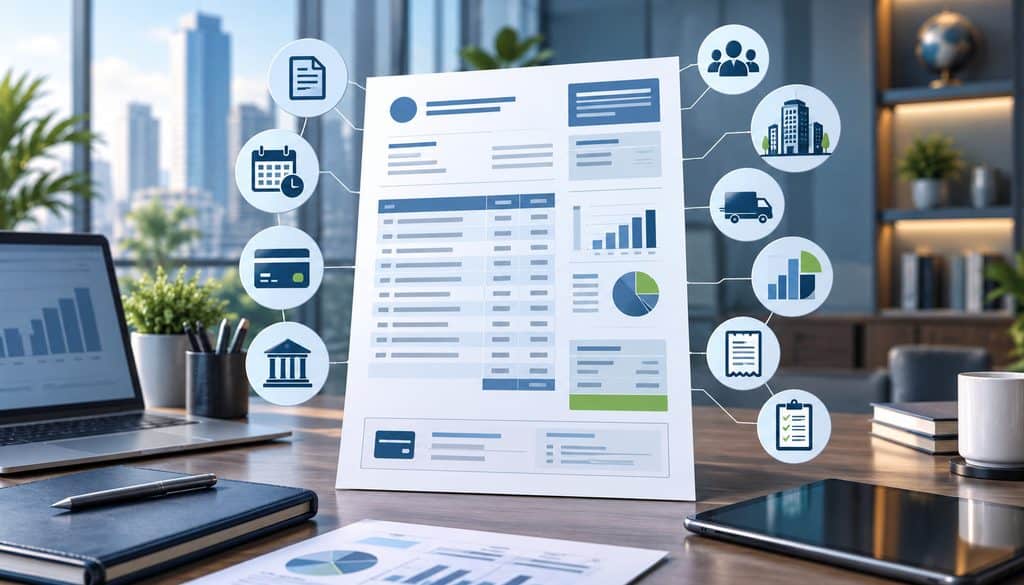
A monthly statement is not simply a grand total with “September lunches” in the description.
Successful invoicing regular business customers restaurant workflows are designed around what the customer’s AP department needs to review, code, approve, and pay.
At minimum, each underlying transaction should retain:
- order date;
- order number;
- ordering employee or signer;
- PO, department, project, or cost-center reference where applicable;
- ordering location;
- subtotal;
- sales tax;
- voluntary tip or service charge where applicable;
- order total;
- refunds or credits;
- payments or adjustments already applied.
Invoicing Regular Business Customers With Order-Level Detail
For house account billing food business customers, order-level detail is not just a customer-service feature. It supports receivable quality.
Suppose the statement contains ten transactions totaling $4,860. AP questions a $420 Tuesday lunch.
If the statement identifies the ordering employee, department, order number, location, taxable amount, tax, tip, and total, the customer can investigate one transaction without freezing review of the entire account.
That is much better than sending an unexplained $4,860 balance.
| Field | Why AP Needs It | Example |
| Date | Identifies when expense occurred | Sept. 9 |
| Order number | Links statement to POS record | 10482 |
| Employee/signer | Identifies purchaser | Jordan P. |
| PO/department | Supports internal coding | HR-TRAINING |
| Location | Identifies selling unit | Market Street Cafe |
| Subtotal | Shows food amount | $186.00 |
| Tax | Separates tax component | $14.88 |
| Tip/service charge | Makes add-on amount visible | $20.00 |
| Total | Amount added to AR | $220.88 |
A line might therefore appear as:
Sept. 9 | #10482 | Jordan P. | HR-TRAINING | Market Street | $186.00 subtotal | $14.88 tax | $20.00 tip | $220.88 total
The exact fields vary by business and customer, but the objective is consistent: make each transaction independently identifiable.
This is especially important when invoicing regular business customers restaurant operators serve organizations with several departments or budget owners.
Purchase Orders and Cost Centers
Many companies require a PO number, department, project, client matter, or cost center before AP can approve an expense.
If the requirement exists, capture it at order time rather than asking the bookkeeping team to reconstruct it at month-end.
A POS house-account workflow should therefore support required custom references or provide a connected process for storing them.
Credits and Disputed Orders
When a customer questions an order, investigate the specific transaction.
A useful workflow is:
- Customer identifies the disputed order.
- Pull the POS receipt or transaction record.
- Verify the purchaser.
- Verify the PO, department, or reference.
- Confirm tax and tip/service-charge presentation.
- Issue a correction or credit memo if justified.
- Keep the undisputed statement amount identifiable.
Attach credit memos to specific transactions where practical. Avoid deleting history merely to make the current balance look correct.
An invoice dispute is also different from a card chargeback.
An invoice dispute occurs while the customer and supplier are resolving whether a commercial receivable is valid.
A chargeback can arise after a statement has actually been paid by card and the cardholder or issuer invokes a payment-network dispute process.
The evidence, timing, and resolution channels differ.
Card-on-File, ACH, Payment Links, and Check Remittance
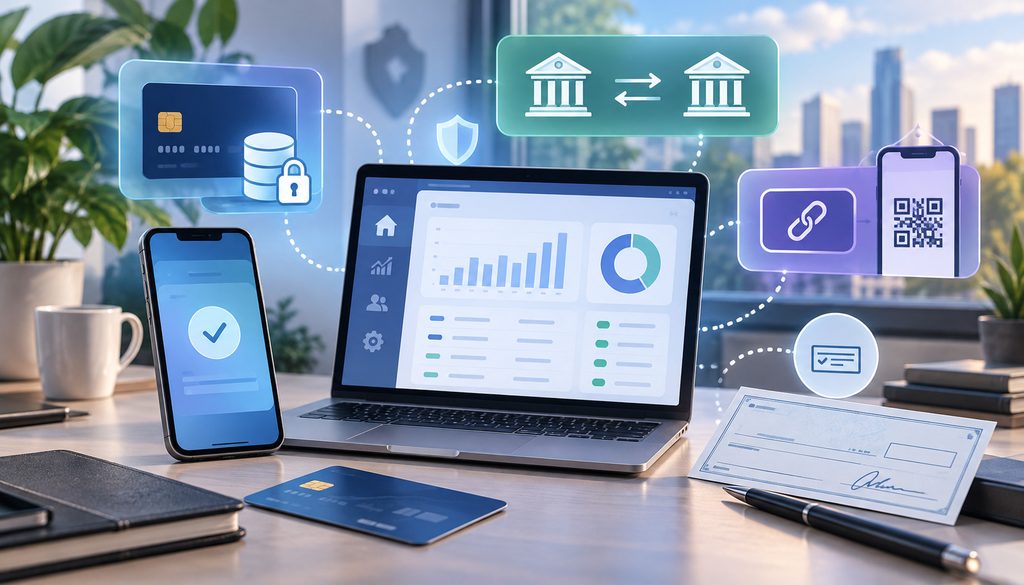
Once a statement has been approved, the operator still needs to collect it efficiently.
The most common choices for b2b billing for food businesses include a properly stored/tokenized card, ACH, a hosted payment link, and check.
Each has different economics and operational risks.
Card-on-File Statement Payment
A corporate customer may authorize the business to charge an approved card when statements become due.
The authorization should identify the intended use and timing sufficiently for the arrangement, and the payment setup should use the processor or payment provider’s secure credential-storage workflow rather than card numbers copied into spreadsheets, POS notes, email, or paper files.
Mastercard’s current credential-on-file rules describe credential-on-file transactions as involving the cardholder’s express authorization to store account data and subsequently use it for later transactions.
Do not assume that a card used for one lunch automatically authorizes future statement settlement.
Payment credentials should also be handled under applicable PCI DSS controls. The PCI Security Standards Council specifically states that card verification values such as CVV/CVC cannot be retained after authorization, including for card-on-file use.
PCI SSC guidance on card verification codes confirms that these values are sensitive authentication data and cannot be stored after authorization.
Use a provider-hosted payment form or tokenized vault where appropriate instead of creating a homemade card database.
ACH Debit
ACH can be attractive for larger corporate statements because its fee structure may differ materially from a percentage-based card model, depending on the operator’s actual provider agreement.
That does not make ACH free or riskless.
ACH debit requires an appropriate authorization arrangement and creates return risk. Nacha emphasizes that authorizations are foundational to ACH debit compliance and that originators need to be able to demonstrate appropriate authorization. Nacha’s ACH authorization guidance explains the importance of maintaining compliant authorizations and proof where required.
Businesses should use the ACH workflow supplied by their bank, processor, invoicing provider, or other appropriate provider rather than manually collecting bank credentials in unsecured notes.
Emailed Payment Links
A payment link leaves the customer in control of initiating payment after receiving the statement.
That can be useful when the company does not want automatic debit.
The link may allow card, ACH, or other supported payment rails depending on the provider. The statement record and the resulting payment should remain connected so bookkeeping staff can determine exactly which balance was settled.
Payment links add a manual AP step, so follow-up may still be required.
Checks
Checks avoid a card percentage fee but are not operationally free.
The business may have to handle:
- mail delay;
- check intake;
- deposit processing;
- remittance matching;
- data entry;
- lost checks;
- bank-return issues;
- collections follow-up.
The decision should therefore compare total collection cost, not merely processor pricing.
| Payment Method | Automation | Cost Pattern | Main Risk/Tradeoff |
| Card on file | High | Percentage-based pricing often matters as balance grows | Fees and potential disputes |
| ACH debit | High | Provider-specific; may behave differently from card pricing | Authorization and return risk |
| Payment link | Medium | Depends on payment rail selected | Customer must take action |
| Check | Low | May avoid processor percentage but creates administrative cost | Delay and manual reconciliation |
What Does Payment Cost on a $5,000 or $10,000 Statement?
Do not insert a generic internet processing rate into the analysis.
Use the company’s contracted pricing.
For a card:
Card cost = statement amount × contracted card rate + applicable contracted fees
For a $5,000 statement, substitute the merchant’s own rate and charges into that formula.
For a $10,000 statement:
$10,000 × actual contracted card rate + applicable fees
For ACH:
ACH cost = applicable contracted ACH fee model
That model could be flat, percentage-based, capped, blended, or otherwise structured depending on the provider. Do not assume one structure.
This payment-rail analysis matters because statement billing net 30 food service arrangements may produce much larger individual payment amounts than ordinary lunch tickets.
A percentage-based card cost scales with the balance. An ACH structure may behave differently. A check may avoid a processor percentage but consume more employee time and delay cash availability.
Operators should compare the entire workflow: collection reliability, fees, settlement timing, returns, disputes, reconciliation burden, and customer preference.
Do not automatically add a “credit-card fee” to the statement simply because card acceptance costs more. Surcharging and other payment-method pricing can implicate network rules, state law, card-type restrictions, required disclosures, processor enrollment, and other requirements. Verify the program before implementing one.
House Account Software Setup at the Register
Strong house account software setup starts with the customer master record.
The system should ideally maintain:
- customer identity;
- AP contact;
- billing address;
- statement cycle;
- due terms;
- credit limit;
- current outstanding balance;
- available credit;
- authorized purchasers;
- required PO/department fields;
- tax status;
- payment arrangement;
- account status;
- adjustment history.
The register should not need a separate spreadsheet to determine whether the account is valid.
POS Register Workflow
A practical flow is:
Employee places order
→ cashier selects approved house account
→ purchaser is validated
→ required PO/department/reference is captured
→ POS posts order to AR rather than cash/card
→ available credit declines
→ receipt is generated
→ transaction becomes available for statement billing.
A dedicated house-account or AR tender is critical.
Do not record an unpaid house-account transaction as cash merely to close the order.
Do not zero it out with a discount.
Do not leave it indefinitely as an open check.
Those workarounds can break sales reporting, cash-drawer reconciliation, tax reporting, AR balances, and audit trails.
Why Fake Tendering Breaks the Books
Suppose the POS records a $125 corporate lunch as cash even though no cash changed hands.
The sales report may now claim $125 was received.
The drawer does not contain that money.
The customer still owes $125.
Unless someone manually rebuilds the receivable elsewhere, the financial records no longer tell the same story.
A proper house-account tender communicates: the sale occurred, but settlement remains outstanding from this customer.
For operators evaluating broader POS architecture, POS integration requirements are worth reviewing with the same discipline: identify exactly which records move, how exceptions are handled, and which system is the source of truth.
House Account Subledger and AR Control Account
Customer-level balances form a house-account subledger.
At a high level:
POS house-account sales
→ customer AR balances
→ statements
→ customer payments
→ payment application
→ bank settlement
→ accounting records.
The total customer balances should reconcile to the relevant accounts-receivable control account in the accounting system, subject to the business’s accounting policies and system architecture.
A useful reconciliation is:
**Beginning AR
- new house-account charges
− payments applied
− credit memos/approved adjustments
= ending AR**
The detailed customer ledger should support that ending amount.
When accounting and operating systems exchange information, data mapping deserves the same attention as other POS-to-back-office integrations. Integration does not eliminate reconciliation; it changes where errors can occur.
Software Versus Spreadsheet
A spreadsheet can document an account application or provide supplementary analysis. It should not become the core transaction engine once volume grows.
Software is better positioned to enforce:
- account limits;
- purchaser controls;
- transaction posting;
- statement generation;
- aging;
- payment application;
- adjustment history;
- permissions;
- audit trails.
Most importantly, never store raw card credentials or bank credentials in an Excel workbook, Google Sheet, shared note, or general customer-comment field.
B2B Billing for Food Businesses: Aging and Delinquency Controls
The operational difference between consumer payment and b2b billing for food businesses becomes obvious after an invoice goes unpaid.
Consumer restaurant transactions are usually settled immediately.
House accounts create aging.
A common management report groups balances into buckets such as:
- current;
- 1–30 days past due;
- 31–60 days past due;
- 61+ days past due.
Those are management categories, not statements about legal rights or mandatory collection deadlines.
The business should define its own escalation policy based on its terms, contracts, risk tolerance, customer relationships, and applicable law.
Relationship-Friendly Reminder Cadence
An illustrative process might look like this:
| Account Status | Communication | Ordering Status |
| Statement issued | Send statement and remittance instructions | Open within limit |
| Payment due | Automated reminder to AP | Open if policy permits |
| Shortly overdue | Friendly AP follow-up | Monitor exposure |
| Materially overdue | Direct contact with AP/account owner | Restrict additional credit |
| Beyond internal threshold | Explain temporary credit suspension | Prepay only |
| Balance resolved | Confirm payment and review account | Reinstate under approved terms |
The exact timing belongs in internal policy. Do not copy arbitrary day counts from another business and treat them as law.
When to Suspend a Delinquent House Account
Possible triggers include:
- outstanding balance exceeds the approved limit;
- oldest unpaid statement exceeds the business’s internal threshold;
- repeated promises to pay are missed;
- ACH or checks are returned;
- account ownership or billing information cannot be validated;
- unresolved purchasing-control problems continue;
- the customer repeatedly maxes out available credit without bringing the balance down.
The key principle is to stop adding unsecured exposure before the receivable becomes unmanageable.
Suspend Credit, Not Necessarily the Customer
Suspending terms does not have to mean refusing service.
A valuable customer can often continue ordering by card, payment link, or another prepay method while its prior balance is being resolved.
That protects the relationship while preventing additional AR growth.
A professional message can cover four points:
- the account is temporarily on prepay;
- the outstanding balance requiring attention;
- what needs to occur before terms can be reviewed or restored;
- the appropriate billing contact for questions.
Avoid aggressive language in routine operational communication.
Reinstating Terms
Reinstatement should be a credit decision, not an automatic switch.
Possible conditions include:
- outstanding balance paid;
- successful period on prepay;
- reduced credit limit;
- shorter settlement terms;
- lower order cap;
- authorized statement autopay.
Payment history should also influence future limit reviews.
A limit increase may be reasonable when spending grows predictably, payments remain consistently timely, and disputes stay low.
A reduction may be appropriate when late payment becomes more frequent, utilization remains permanently near the limit, returned payments occur, or meaningful business circumstances change.
Credit Concentration
Do not overlook customer concentration.
If one corporate account represents a large percentage of the business’s receivables, the operator effectively depends on that customer’s AP process for a meaningful portion of cash flow.
Track both revenue concentration and receivable concentration.
That is particularly important for smaller cafes and food-hall vendors with limited working capital.
Sales Tax and Tip Handling on Invoiced Corporate Orders
Corporate billing does not automatically change the taxability of a food transaction.
A taxable meal generally does not become tax-exempt simply because it was charged to an account and paid thirty days later.
Tax treatment depends on the actual transaction and applicable jurisdiction.
Likewise, a company customer is not automatically exempt merely because it has an AP department, tax ID, nonprofit affiliation, resale activity, or corporate purchasing policy.
Where a customer claims an exemption, retain the documentation required by the relevant jurisdiction and determine whether that exemption actually applies to the transaction being sold.
Walk-In Versus House-Account Tax Treatment
The payment timing and the tax treatment are separate questions.
Consider two identical taxable lunch orders.
One customer pays by card immediately.
The other approved company charges the lunch to its house account.
The second transaction should not be treated as exempt merely because payment occurs through a monthly statement.
Sales-tax reporting and remittance timing also depends on applicable jurisdictional rules and the operator’s circumstances. Do not assume that tax associated with an invoiced order can always be delayed until the corporate customer pays.
Operators should follow the rules of the state and locality in which they operate.
As one jurisdiction-specific example—not a nationwide rule—California’s official restaurant guidance explains that many restaurant food and beverage sales are taxable and distinguishes optional tips from mandatory charges for sales-tax purposes.
California Department of Tax and Fee Administration restaurant guidance states that optional gratuities and mandatory charges can receive different tax treatment under California rules.
The reason to include that example is not to apply California law elsewhere. It demonstrates why the POS and statement should preserve separate tax, tip, and service-charge fields instead of collapsing everything into one number.
Tips on Corporate Orders
Tips also deserve order-level control.
A voluntary tip chosen by an authorized employee should appear clearly on that employee’s transaction.
That helps AP understand:
- who added it;
- the amount;
- which order it relates to;
- whether it falls within corporate policy.
Some employers restrict gratuities or set internal limits. The cafe or deli does not need to enforce every customer expense policy, but the system should give the customer enough information to apply its own rules.
Do not hide all tips from a month inside one “adjustments” line.
Service Charges Are Not Automatically Tips
A mandatory service charge is not automatically equivalent to a voluntary tip.
Accounting, payroll, tax, wage-and-hour, and disclosure treatment may differ depending on jurisdiction and circumstances.
Keep separate system fields for:
- food subtotal;
- sales tax;
- voluntary tip;
- mandatory service charge;
- delivery charge;
- other disclosed charges.
This supports both customer review and internal accounting.
Tax-Exempt Accounts
If a customer legitimately qualifies for exempt treatment under applicable rules:
- collect appropriate documentation;
- associate it with the account;
- monitor expiration or changes where relevant;
- train employees on when the status applies;
- preserve order-level records.
Do not configure every future transaction as exempt merely because one particular purchase qualifies.
A sophisticated corporate house account cafe workflow may therefore need tax status at both account and transaction levels.
Multi-Location and Food Hall House Accounts
Multi-location accounts add another dimension to AR design.
A corporation may purchase from three branches but want one centralized monthly statement.
That can work, provided individual transactions still preserve their selling location.
The corporate statement might aggregate the customer balance while showing:
- Location A orders;
- Location B orders;
- Location C orders;
- consolidated payments;
- credits or adjustments.
Internally, location-level sales, taxes, tips, service charges, and AR activity must still map to the correct entities and accounts.
Operators assessing broader multi-unit architecture may find cloud POS scaling and integration considerations useful when evaluating whether systems can preserve location detail while supporting centralized reporting.
Food Hall Considerations
A food hall creates a special issue: the building may look like one destination to the customer while individual vendors remain separate merchants or legal businesses.
Do not assume one corporate “food hall account” can automatically be used across every stall.
Determine:
- who is the merchant of record;
- who owns the receivable;
- who invoices the corporation;
- whose tax treatment applies;
- where payment settles;
- how individual vendor sales are reported;
- whether the software architecture actually supports shared credit.
If each vendor is independently operating and independently collecting payment, a shared house account requires much more than a common customer name.
Common B2B Billing Mistakes for Cafes, Delis, and Food Halls
Most failures in house account billing food business programs do not begin with sophisticated accounting problems. They begin with small operational shortcuts.
Someone opens an account without a limit.
Cashiers stop recording employee names.
One transaction gets tendered as cash.
The customer’s AP email changes but the account record does not.
Eventually the monthly statement stops matching either the POS or the customer’s expectations.
| Mistake | Cash-Flow/Accounting Risk | Better Approach |
| Offering terms to every repeat buyer | Unnecessary unsecured exposure | Use a qualification process |
| No written credit limit | Balance can expand unnoticed | Establish and enforce limit |
| No authorized purchaser list | Unauthorized-order disputes | Maintain purchaser controls |
| One lump statement total | AP cannot reconcile charges | Show order-level detail |
| House account mapped as cash | Drawer and AR misstate | Use dedicated AR tender |
| Storing card numbers manually | Security/compliance exposure | Use tokenized provider storage |
| No aging review | Delinquency grows unnoticed | Review AR routinely |
| Continuing credit indefinitely | More cash tied up in receivables | Move delinquent accounts to prepay |
| Assuming B2B means tax exempt | Potential tax errors | Verify actual transaction/exemption |
| Hiding tips in total | AP and accounting lose visibility | Itemize tip/service charge |
Another mistake is treating invoicing regular business customers restaurant operations as a monthly clerical task rather than a daily data-quality process.
Month-end billing can only be as accurate as the transactions recorded throughout the month.
The same is true of house account software setup. Buying software does not solve poor account controls if employees can bypass the purchaser field, ignore credit limits, or close transactions using the wrong tender.
Food Business House Account Setup Checklist
A new house account billing food business program can use the following sequence.
- Receive the corporate account request: Determine what the customer actually wants to buy and how frequently.
- Verify the legal business identity: Confirm the legal name, DBA where relevant, and billing information.
- Identify the AP contact: Obtain the person or team that receives statements and resolves payment questions.
- Assess order frequency and expected spend: Estimate likely monthly exposure rather than looking only at average ticket size.
- Perform a light credit review: Use business information proportionate to the requested exposure.
- Select a statement cycle: Calendar month, 15th-to-14th, weekly, or another workable period.
- Set payment terms: Define exactly when payment becomes due.
- Set a credit limit: Cap total unpaid exposure.
- Set a per-order cap if needed: Require escalation for unusually large purchases.
- List authorized purchasers: Record the people or roles permitted to charge the account.
- Define PO and cost-center requirements: Capture them at the time of ordering.
- Verify tax status: Do not assume corporate purchases are exempt.
- Record valid exemption documentation where applicable.
- Choose the payment method: Card, ACH, payment link, check, or a supported combination.
- Obtain appropriate card or ACH authorization if used: Keep the payment authorization separate from ordinary one-time purchase assumptions.
- Configure the account in software: Add billing contacts, terms, limits, purchasers, tax status, and account status.
- Map the house-account tender to AR: Do not map unpaid transactions to cash.
- Train register staff: Employees should know how to identify the account and purchaser.
- Post every order to the account: Avoid side ledgers.
- Capture purchaser and order reference.
- Generate a detailed statement: Include each charge, credit, and applicable payment.
- Send it to AP: Use the approved billing destination.
- Apply payment accurately: Match remittance to the correct account and statement.
- Review aging: Track current and past-due balances.
- Suspend terms when policy requires.
- Allow prepay ordering where appropriate: Protect the customer relationship while controlling exposure.
- Review credit periodically: Adjust limits and terms based on actual performance.
- Reconcile the AR subledger to the GL.
For b2b billing for food businesses, the core financial flow should remain visible from end to end:
POS house-account sale → customer AR subledger → monthly statement → payment receipt → payment application → bank → GL control account.
A practical dashboard can track:
- total AR;
- current AR;
- past-due AR;
- top customer balances;
- available credit;
- account utilization;
- days outstanding where useful;
- suspended accounts;
- payment-method mix;
- unresolved disputes.
Frequently Asked Questions
What is house account billing for a food business?
House account billing food business arrangements allow approved companies to buy food throughout a billing period and pay later. Each order posts to the customer’s receivable, reduces available credit, and appears on a later statement. It is accrue-then-invoice trade credit, not a prepaid balance or fixed subscription.
How does a corporate house account at a cafe work?
A corporate house account cafe program approves the company first, assigns terms and a credit limit, identifies authorized employees, and records each purchase against the account. At statement close, the cafe sends AP a detailed list of orders and collects the resulting balance.
Which customers should qualify for a house account?
Consider frequency, ticket size, expected monthly spending, payment history, organizational stability, AP processes, customer concentration, and the amount of unsecured exposure the business can tolerate. Frequent ordering alone should not guarantee approval.
Should I run a credit check before giving a business terms?
A proportionate business-credit review is sensible.
For some accounts, confirming legal identity, AP contacts, public business information, expected spend, references, and existing payment history may be sufficient. Larger exposure may justify more formal business-credit information. Avoid unnecessary consumer credit pulls.
What credit limit should I set for a corporate food account?
There is no universal amount.
Consider expected spend, payment history, statement frequency, margins, customer concentration, dispute experience, and cash-flow tolerance. The system should calculate available credit as the approved limit minus unpaid posted balances.
What does Net 30 mean for statement billing?
For statement billing net 30 food service, Net 30 generally describes when the amount becomes due, but the agreement should clearly define what starts the period. Do not assume Net 30 is automatically preferable to Net 7, Net 15, due-on-receipt, weekly settlement, or another commercial arrangement.
What should a monthly corporate food statement show?
Show the order date, order number, employee or signer, PO/department where relevant, selling location, subtotal, sales tax, tip or service charge, total, credits, and applicable payments. Detailed statements help the AP team investigate individual transactions without questioning the entire balance.
How do I track which employee placed each order?
Maintain authorized purchasers at the account level and capture the actual purchaser on each transaction. Depending on the operation, identification might use employee name, account PIN, employee ID, department code, digital acknowledgement, or another appropriate control.
Can a corporate customer pay the monthly statement by card on file?
Yes, where the customer provides appropriate authorization and the processor or provider supports the arrangement. Use secure tokenized storage and do not assume a one-time card payment gives automatic permission for future statement debits.
Is ACH better than card for a large monthly statement?
Not universally.
ACH and cards can have different pricing, settlement, authorization, return, and dispute characteristics. Compare your actual contracts and collection experience rather than assuming one payment rail is always cheaper or safer.
How do I set up a house account in restaurant or cafe software?
Good house account software setup should include customer information, AP contact, terms, credit limit, balance, available credit, authorized purchasers, tax status, payment workflow, and active/suspended status.
At the register, the account should appear as a proper AR or house-account tender rather than fake cash or an unpaid open check.
When should I suspend a delinquent house account?
Use documented internal triggers such as exceeding the credit limit, aging beyond the business’s approved threshold, repeated missed commitments, returned payments, or unresolved account-validation concerns.
Suspending credit does not require terminating the relationship. The customer can often continue ordering on prepay.
Are corporate food orders automatically sales-tax exempt?
No.
Taxability generally depends on the transaction and jurisdiction, not simply on the customer being a business or receiving a monthly invoice. Obtain and retain valid exemption documentation where an exemption legitimately applies.
How should tips appear on invoiced corporate orders?
Show tips separately at the order level.
That allows the company to identify who authorized the amount and avoids confusing a voluntary gratuity with a mandatory service charge or delivery fee.
How do I reconcile house-account balances to my accounting system?
Reconcile customer-level house-account balances to the relevant accounts-receivable control account. The basic flow is opening AR + new house-account charges − payments − valid credits/adjustments = ending AR. The resulting balance should be supported by individual customer records.
Conclusion
A food-business house account is controlled trade credit, not an unlimited restaurant tab. A sound house account billing food business process begins by deciding which customers merit terms, how much unpaid exposure the business will permit, and which employees may make purchases.
Every order should carry enough information for both sides to identify it later. Employee names, order numbers, departments, PO references, locations, taxes, tips, service charges, and credits should remain visible instead of disappearing into one month-end total.
Payment collection should balance economics with reliability. Tokenized card payments, authorized ACH, payment links, and checks each create different costs and operational risks.
Software should enforce account status and available credit at the register while posting unpaid orders to accounts receivable rather than cash. When a customer falls behind, suspending credit and allowing prepay purchases can often preserve the business relationship without creating additional unsecured exposure.
Finally, corporate billing does not itself make a food order tax-exempt, and house-account balances should reconcile cleanly from POS transactions to customer AR, statement, payment, bank activity, and the accounting control account.