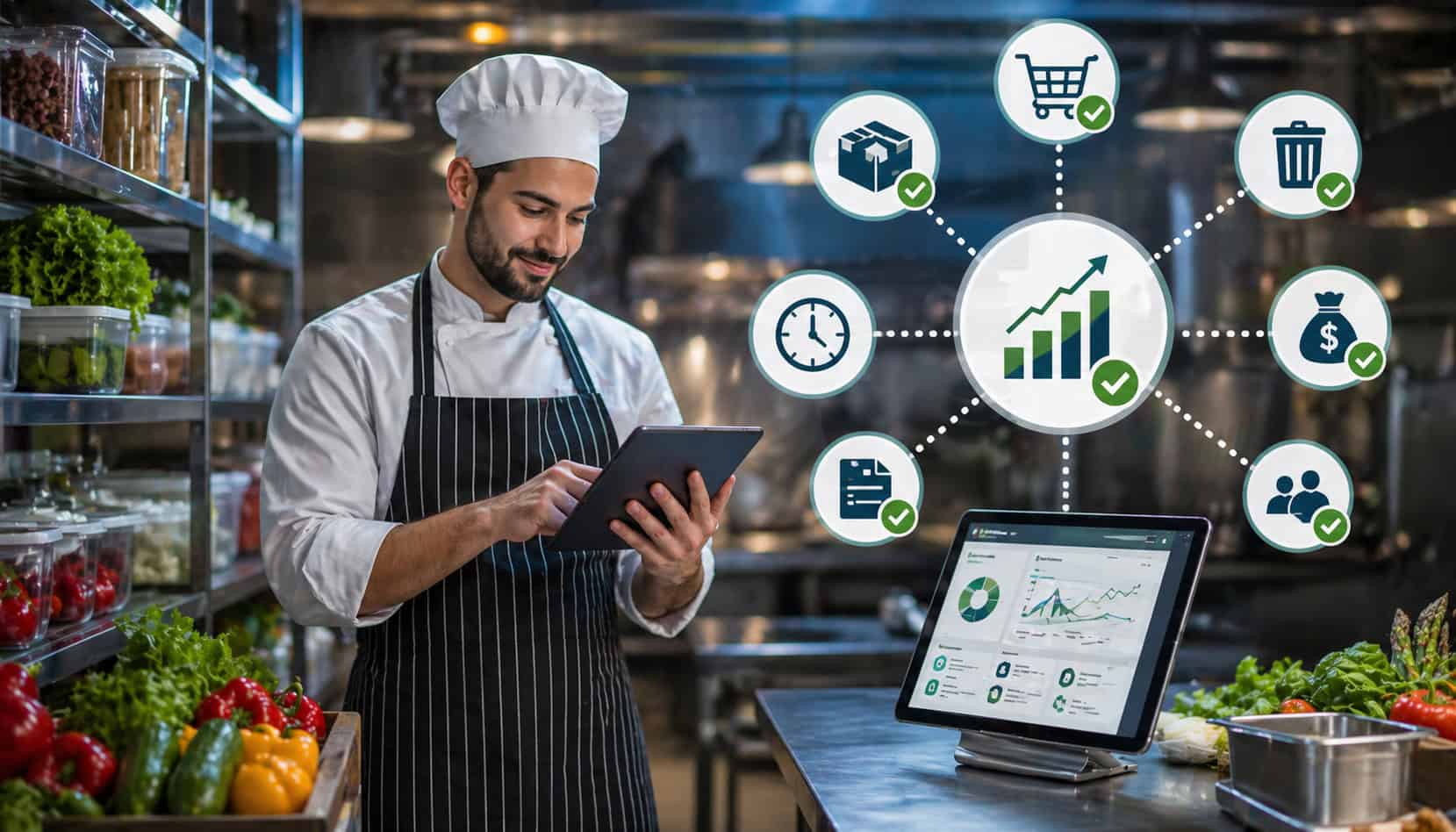
Inventory management can make or break a food service operation. A busy kitchen may serve excellent food, have trained staff, and bring in steady sales, but if stock levels are inaccurate, profitability can slip away quietly.
Food waste, emergency purchasing, overordering, stockouts, supplier delays, and poor recipe costing all create pressure on margins.
That is why the Benefits of Real-Time Inventory Tracking in Food Service matter for restaurants, catering businesses, cafeterias, cloud kitchens, hotels, bars, bakeries, and multi-location food businesses. Real-time inventory tracking helps teams know what they have, what they need, what is being wasted, and what is affecting food costs.
Instead of waiting for weekly counts or relying on outdated spreadsheets, managers can make faster decisions using live inventory visibility. A strong food inventory management system can connect stock levels, recipes, purchasing, supplier data, and sales activity in one place.
Real-time inventory tracking food service tools are not just about counting ingredients. They support better ordering, smarter prep planning, improved restaurant stock control, stronger food cost control, and less operational confusion.
What Is Real-Time Inventory Tracking in Food Service?
Real-time inventory tracking in food service is the process of updating stock information as inventory changes happen. Instead of recording purchases, usage, waste, and transfers days later, the system reflects activity as close to the moment as possible.
In a food service environment, inventory changes constantly. Ingredients arrive from suppliers, cooks prep recipes, servers enter orders, managers transfer items between locations, and staff discard expired or damaged stock. A restaurant inventory tracking system helps capture those movements so managers can see more accurate inventory data throughout the day.
A modern food inventory management system often connects with point-of-sale systems, purchasing tools, recipe databases, barcode scanning, supplier invoices, and reporting dashboards.
When a menu item is sold, the system can deduct the estimated ingredient quantities from available stock. When a supplier order is received, the stock count updates. When an item is wasted, transferred, or adjusted, the inventory record changes.
This creates a clearer picture of what is happening inside the business. Managers can see whether chicken, produce, flour, dairy, packaging, or cleaning supplies are running low before the shortage affects service.
Real-time inventory tracking benefits food service teams by improving speed and confidence. Instead of asking staff to check the walk-in during a rush, managers can review live stock data. Instead of guessing whether they have enough ingredients for a catering order, they can verify stock levels and purchase history.
For a deeper look at how cloud-based systems work, this guide to cloud food inventory management is a useful supporting resource.
Why Traditional Inventory Methods Fall Short
Traditional inventory methods often rely on paper sheets, spreadsheets, whiteboards, manual counts, and delayed reporting. These methods can work for very small operations, but they become harder to manage as order volume, menu complexity, staff size, and supplier activity grow.
The biggest issue is delay. If inventory counts are only updated once a week, managers are making decisions based on old information. A spreadsheet may show that enough stock is available, but the actual walk-in may tell a different story. Ingredients may have been used, wasted, spoiled, transferred, or incorrectly counted.
Manual tracking also increases the risk of human error. Staff may enter the wrong unit, forget to record waste, double-count a case, miss an open container, or update one sheet while another remains outdated. Over time, these small errors create large discrepancies between recorded stock and actual stock.
Another limitation is poor inventory visibility. A manager may know what is in one kitchen but not what is available at another location. A catering team may order ingredients that already exist in storage. A chef may prepare too much because sales trends are not connected to inventory data.
Traditional restaurant stock control often creates reactive decision-making. Teams discover shortages when they are already in service. Managers place emergency orders at higher prices. Menus change unexpectedly. Staff lose time checking shelves, calling suppliers, or searching for missing items.
Spreadsheets can also make accountability difficult. It is hard to see who changed a count, when an item was received, why waste increased, or which recipes are driving higher usage. Without reliable tracking, food cost control software or reporting tools cannot produce accurate insights.
Key Benefits of Real-Time Inventory Tracking in Food Service
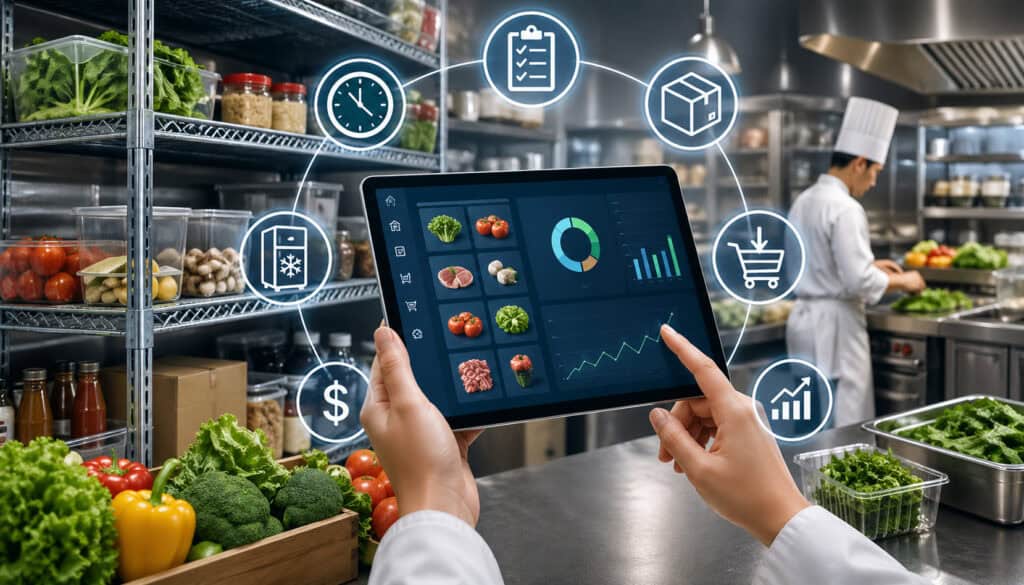
The key Benefits of Real-Time Inventory Tracking in Food Service include better accuracy, less waste, stronger cost control, improved purchasing, faster decision-making, and smoother kitchen operations. These benefits matter because inventory affects nearly every part of a food service business.
When inventory is accurate, managers can order with confidence. They can avoid buying too many slow-moving ingredients and avoid running out of high-demand items. This improves cash flow because money is not trapped in excess stock sitting on shelves.
Real-time inventory tracking benefits kitchen staff as well. Cooks and prep teams can plan production based on actual stock levels. Managers can identify shortages before service begins. Purchasing teams can compare supplier prices, lead times, and order patterns.
Inventory automation in food service also improves reporting. When the restaurant inventory tracking system connects sales, recipes, and purchasing, managers can compare theoretical usage with actual usage. This helps uncover waste, over-portioning, theft, receiving errors, or recipe inconsistencies.
| Benefit | How It Works | Business Impact |
| Improved accuracy | Stock updates after sales, receiving, waste, and transfers | Fewer count errors and better ordering decisions |
| Reduced food waste | Tracks expiration dates, usage trends, and slow-moving items | Less spoilage and lower disposal costs |
| Better cost control | Connects inventory data with recipe costs and supplier prices | Stronger margins and clearer profitability |
| Real-time visibility | Shows current stock across kitchens, storage areas, or locations | Faster decisions and fewer stockouts |
| Smarter purchasing | Uses par levels, alerts, and supplier data | Less overordering and fewer emergency buys |
| Better forecasting | Compares sales trends with ingredient usage | More accurate prep and demand planning |
Real-time inventory tracking is especially valuable for perishable items. Meat, seafood, dairy, produce, sauces, baked goods, and prepared items all have limited shelf lives. Without strong kitchen inventory tracking, waste can rise quickly.
Improved Inventory Accuracy
Improved inventory accuracy is one of the most important real-time inventory tracking benefits. In food service, even small mistakes can create costly problems. A missing case of protein, an incorrect unit conversion, or an unrecorded transfer can affect purchasing, prep, and menu availability.
A restaurant inventory tracking system reduces these problems by updating stock records as activity happens. When an order is received, staff can enter quantities immediately. When a recipe is prepared, ingredient usage can be deducted automatically. When food is wasted, the reason can be logged.
This reduces duplicate entries, missed updates, and confusion between actual and recorded stock. It also helps managers spot discrepancies sooner. If the system shows a certain quantity but the physical count is different, the team can investigate before the problem grows.
Accurate inventory also supports better recipe costing. If ingredient quantities, supplier prices, and usage data are wrong, menu profitability reports will be unreliable. With real-time inventory visibility, managers can make pricing and purchasing decisions based on cleaner data.
Accuracy improves accountability too. Staff can see what was received, adjusted, wasted, or transferred. This creates a clearer audit trail and reduces guesswork during inventory reviews.
Reduced Food Waste
Food waste is a major challenge in food service because many ingredients are perishable, demand changes quickly, and prep decisions are often made under pressure. Real-time inventory tracking helps reduce waste by showing what is available, what is aging, and what needs to be used first.
A strong food inventory management system can track expiration dates, batch numbers, storage locations, and usage patterns. This helps staff rotate stock properly and prioritize items that are close to expiration. It also reduces the chances of ordering ingredients that are already available.
Real-time data supports smarter prep planning. If sales trends show lower demand for a dish, managers can reduce prep quantities. If a catering order increases demand, they can adjust purchasing before shortages happen.
Waste tracking is especially useful because it shows why food is being discarded. Spoilage, overproduction, incorrect prep, customer returns, damaged packaging, and portioning mistakes all require different solutions.
This article on how real-time food inventory tracking reduces waste offers additional practical examples for waste reduction.
Better Cost Control and Profit Margins
Food cost control depends on accurate inventory data. If managers do not know what ingredients cost, how much is being used, and where losses occur, it becomes difficult to protect profit margins.
Real-time inventory tracking helps connect purchasing, recipe costing, portion control, and sales performance. When supplier prices change, managers can see how those changes affect menu costs. When actual ingredient usage is higher than expected, they can investigate portioning, waste, theft, or recipe execution.
Food cost control software becomes more valuable when it uses reliable inventory data. It can help identify high-cost items, low-margin menu items, frequent waste patterns, and supplier price increases. This gives operators the information needed to adjust recipes, update pricing, negotiate with suppliers, or change purchasing habits.
Better cost control also improves cash flow. Overstocking ties up money in ingredients that may spoil before they are used. Understocking leads to rush orders, substitutions, and lost sales. Real-time inventory tracking helps balance availability with financial discipline.
Profit margins in food service are often tight, so small improvements matter. Reducing waste, improving purchasing accuracy, and controlling portions can create meaningful financial gains over time.
Real-Time Inventory Tracking and Kitchen Efficiency
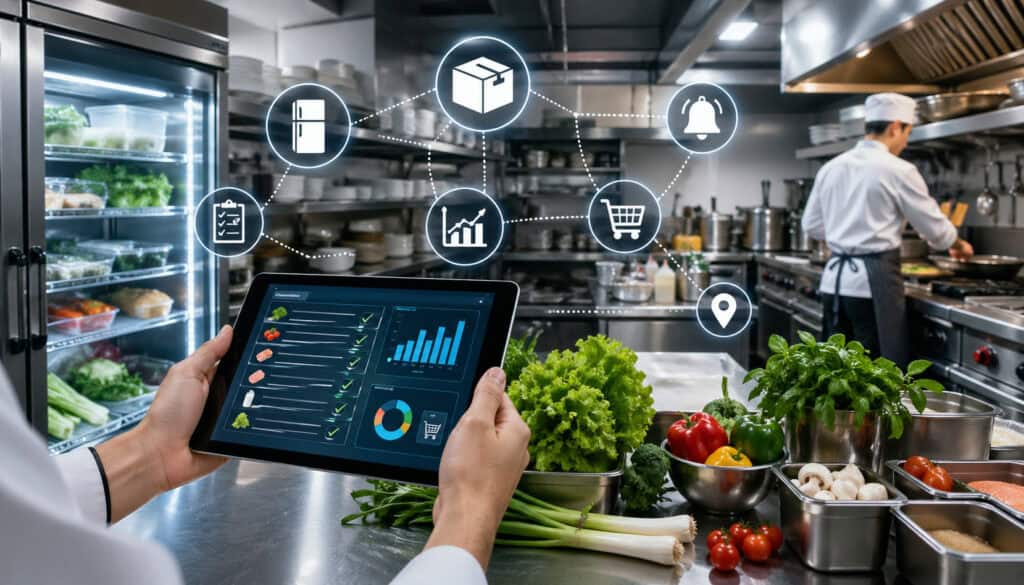
Kitchen efficiency depends on timing, communication, preparation, and consistency. When inventory information is outdated, kitchen teams waste time searching for ingredients, changing prep plans, or reacting to shortages. Real-time inventory tracking helps reduce this friction.
A kitchen inventory tracking system gives staff better visibility before service starts. Prep teams can see whether ingredients are available, which items need to be used first, and whether any shortages may affect the menu. This allows managers to adjust prep lists, update specials, or place orders before problems reach guests.
Real-time tracking also improves communication between front-of-house and back-of-house teams. If an item is running low, managers can update menu availability sooner. Servers can avoid selling items that the kitchen cannot prepare. This reduces guest frustration and service delays.
Inventory automation in food service can also streamline repetitive tasks. Low-stock alerts, automated reorder suggestions, supplier order history, and usage reports reduce the time managers spend manually checking shelves or updating spreadsheets.
For catering businesses, kitchen efficiency is especially important because orders are often planned in advance. Real-time inventory visibility helps teams confirm whether they have the ingredients needed for upcoming events and whether additional purchasing is required.
In multi-shift operations, real-time systems also support smoother handoffs. Morning, afternoon, and evening teams can work from the same data instead of relying on notes, memory, or verbal updates.
Faster Decision-Making
Food service managers make dozens of decisions each day. They decide what to prep, what to order, what to feature, what to substitute, and how to respond when demand changes. Real-time inventory tracking makes those decisions faster and more informed.
Without live inventory data, managers often rely on estimates. They may walk through storage areas, ask staff for updates, or review old spreadsheets. This takes time and still may not provide an accurate picture.
With a restaurant inventory tracking system, managers can quickly review current stock, recent usage, supplier orders, and low-stock alerts. If a key ingredient is running low, they can reorder sooner. If an item is overstocked, they can create a special or adjust prep to use it before it expires.
Faster decision-making also helps during unexpected events. Supplier delays, large reservations, weather changes, equipment failures, and sudden demand spikes can all affect inventory. Real-time insights allow teams to respond before the issue becomes a service failure.
Better decisions are not only faster; they are more consistent. When managers use the same data, they are less likely to make conflicting purchasing or prep choices.
Streamlined Ordering and Supplier Management
Ordering is one of the most important parts of food service inventory management. Poor ordering leads to overstocking, spoilage, stockouts, higher costs, and unnecessary stress. Real-time inventory tracking improves ordering by connecting stock levels with actual usage and purchasing needs.
A food service inventory management software platform can help set par levels for key ingredients. When stock drops below the desired level, the system can alert managers or suggest reorder quantities. This keeps ordering more consistent and less dependent on memory.
Supplier management also improves when purchase history, pricing, lead times, and delivery accuracy are tracked in one system. Managers can compare suppliers, identify price changes, and monitor whether deliveries match orders.
Automated ordering does not mean managers lose control. Instead, it gives them better information before they approve purchases. They can review suggested orders, adjust quantities, account for upcoming events, and avoid buying items that are already in stock.
Strong supplier data also supports better negotiation. If managers can show order volume, price changes, fill rates, or delivery issues, they are better prepared to discuss terms with suppliers.
How Inventory Tracking Software Improves Food Service Operations
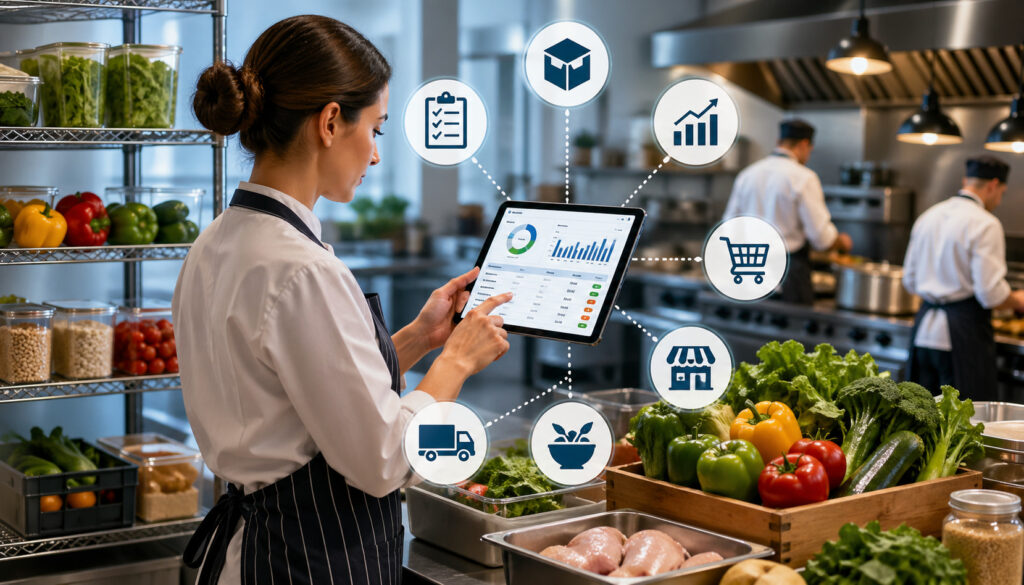
Food service inventory management software improves operations by bringing inventory, sales, purchasing, recipes, and reporting into one connected system. This matters because inventory is not isolated from the rest of the business. Every sale, prep task, supplier order, menu change, and waste event affects stock control.
A strong restaurant inventory tracking system typically includes ingredient-level tracking, recipe costing, supplier management, purchase orders, stock alerts, waste logs, reporting dashboards, and user permissions. Some systems also support barcode scanning, mobile updates, batch tracking, and multi-location reporting.
When software integrates with POS data, it can estimate ingredient usage based on menu sales. For example, if a dish uses a set amount of cheese, sauce, and protein, the system can deduct those ingredients when the item is sold. This gives managers a more current view of inventory without waiting for a manual count.
Software also helps standardize processes. Staff can follow the same receiving steps, count sheets, adjustment reasons, and waste categories. This consistency improves data quality and makes training easier.
Food cost control software features can help managers understand whether menu prices still support profit goals. If supplier prices increase, recipe costs can be updated. If a menu item has a low margin, the team can review portion sizes, ingredients, or pricing.
Inventory tracking for restaurants also supports compliance and traceability. Batch numbers, supplier records, and receiving dates can help teams respond faster if quality or safety concerns arise.
For software selection guidance, this resource on how to choose the right cloud inventory solution can help operators evaluate features more carefully.
Real-Time Inventory Tracking for Multi-Location Food Businesses
Multi-location food businesses face additional inventory challenges. Each location may have different sales patterns, supplier relationships, storage capacity, staff habits, and waste issues. Without centralized visibility, operators may struggle to understand what is happening across the business.
Real-time inventory tracking helps multi-location operators see stock levels, purchasing activity, transfers, waste, and usage trends across all sites. This improves coordination and helps leadership compare performance between locations.
Centralized inventory visibility makes it easier to maintain consistency. If one location uses more of an ingredient than expected, managers can review portioning, prep methods, or menu demand. If another location has excess stock, items may be transferred before they spoil.
A centralized food inventory management system can also improve purchasing power. Operators can review total ingredient usage across locations, negotiate better supplier terms, and reduce fragmented ordering.
Multi-location tracking is also useful for menu planning. If certain dishes perform differently by location, inventory data can help teams adjust purchasing and prep more accurately. This prevents one-size-fits-all ordering that may not match local demand.
For catering businesses or hospitality groups, real-time inventory visibility helps coordinate large events, shared commissary kitchens, and satellite service areas. Managers can see where stock is available and where shortages may occur.
Inventory automation in food service becomes especially valuable at scale. Standardized par levels, shared supplier catalogs, transfer tracking, and centralized reporting reduce administrative work while improving control.
Challenges of Implementing Real-Time Inventory Systems
Real-time inventory systems offer many advantages, but implementation requires planning. The technology alone does not solve inventory problems. Teams need clear processes, accurate setup, training, and ongoing accountability.
One common challenge is setup time. Ingredient lists, units of measure, supplier catalogs, recipes, par levels, storage areas, and user permissions must be configured correctly. If the setup is rushed, reports may be inaccurate from the beginning.
Staff training is another important challenge. Kitchen staff, managers, receivers, and purchasing teams need to understand how to use the system. They also need to know why accurate updates matter. If only one person understands the software, the process becomes fragile.
System integration can also require attention. POS systems, supplier invoices, accounting tools, and recipe databases may need to connect properly. If integrations are incomplete, teams may still need manual workarounds.
Cost is another consideration. Food service businesses should evaluate subscription fees, setup support, hardware needs, training time, and long-term value. The goal is not to buy the cheapest system but to choose one that improves accuracy, reduces waste, and supports better decisions.
Change management may be the hardest part. Staff who are used to paper counts or spreadsheets may resist a new process. Managers should introduce the system gradually, explain the benefits, and provide support during the transition.
Best Practices for Successful Inventory Tracking
Successful inventory tracking depends on disciplined processes, not just software. A food inventory management system works best when the team follows consistent rules for counting, receiving, storing, adjusting, and reviewing inventory.
Start by standardizing inventory units. Confusion between cases, pounds, ounces, portions, bottles, and eaches can create inaccurate counts. Every ingredient should have clear purchase units, storage units, and recipe units.
Next, set realistic par levels. Par levels should reflect sales volume, supplier lead times, storage capacity, shelf life, and upcoming demand. If par levels are too high, waste increases. If they are too low, stockouts become more likely.
Training is essential. Staff should know how to receive deliveries, record waste, update counts, and report discrepancies. Managers should review the system regularly to make sure data is accurate.
Regular audits are also important. Real-time tracking reduces the need for constant manual counts, but physical verification is still necessary. Cycle counts, spot checks, and scheduled inventory reviews help confirm that recorded stock matches actual stock.
Use inventory data for forecasting. Review sales trends, seasonality, event schedules, supplier lead times, and waste history. This helps managers make smarter purchasing and prep decisions.
Helpful best practices include:
- Standardize item names and units of measure.
- Count high-value ingredients more often.
- Record waste immediately.
- Review supplier price changes regularly.
- Set low-stock alerts for critical items.
- Train every role that touches inventory.
- Compare theoretical and actual usage.
- Audit inventory on a consistent schedule.
This guide on best practices for using cloud food inventory software offers additional implementation ideas.
Common Mistakes to Avoid
Real-time inventory tracking can improve food service operations, but common mistakes can limit results. The first mistake is relying only on software without verifying the data. Even the best system needs accurate receiving, waste logging, recipe setup, and physical checks.
Another mistake is failing to train staff. If team members do not understand how to use the system, they may skip updates, enter incorrect quantities, or create workarounds. Training should include both how to use the software and why the process matters.
Ignoring data insights is another problem. Inventory reports are only useful when managers act on them. If waste reports show repeated spoilage, supplier issues, or overproduction, the team should adjust purchasing, prep, or storage practices.
Some businesses also forget to update supplier information. Ingredient prices, pack sizes, lead times, and availability can change. If supplier data is outdated, food cost reports and reorder suggestions may become unreliable.
Skipping audits is another major mistake. Real-time inventory tracking reduces manual workload, but it does not eliminate the need for physical verification. Regular audits help catch shrinkage, data errors, and process issues.
A final mistake is tracking too much too soon. Trying to build a perfect system from day one can overwhelm staff. It is often better to begin with core ingredients, high-cost items, and fast-moving products, then expand gradually.
FAQs
What is real-time inventory tracking in food service?
Real-time inventory tracking in food service means inventory records update as stock changes happen, including deliveries, sales, recipe usage, waste, transfers, and adjustments. It helps managers see current stock levels and make faster, more accurate decisions.
How does inventory tracking reduce food waste?
Inventory tracking reduces food waste by helping teams monitor expiration dates, usage patterns, overproduction, and slow-moving ingredients. This allows kitchens to rotate stock properly, adjust prep levels, and avoid ordering items they already have.
What features should food service inventory software include?
Food service inventory software should include ingredient tracking, recipe costing, supplier management, purchase orders, waste logs, stock alerts, reporting, user permissions, and POS integration. Features like barcode scanning, expiration alerts, and multi-location tracking can also be useful.
Is real-time inventory tracking expensive?
The cost depends on the software, setup, training, and business size. However, real-time inventory tracking can often help reduce waste, prevent overordering, improve food cost control, and lower emergency purchasing costs, which may offset the investment.
Can small restaurants benefit from inventory tracking systems?
Yes. Small restaurants can benefit by tracking high-cost ingredients, reducing spoilage, improving prep planning, and avoiding stockouts. Even a simple restaurant inventory tracking system can help owners and managers control costs more effectively.
How does inventory tracking improve profitability?
Inventory tracking improves profitability by giving managers accurate data on ingredient usage, supplier costs, waste, and recipe margins. This helps reduce losses, improve purchasing decisions, control portions, and protect food margins.
What are the risks of not tracking inventory in real time?
Without real-time inventory tracking, food service businesses may face stockouts, overordering, food waste, inaccurate food costs, supplier issues, and lower profitability. Delayed inventory data can lead to poor decisions and operational inefficiencies.
Conclusion
The Benefits of Real-Time Inventory Tracking in Food Service go far beyond counting stock. Real-time inventory tracking helps food service businesses improve accuracy, reduce waste, control costs, streamline ordering, and make faster decisions.
For restaurants, catering businesses, kitchens, hospitality teams, and multi-location operators, inventory visibility is essential. It helps managers understand what is available, what is being used, what is being wasted, and what needs to change.
A reliable food inventory management system supports stronger restaurant stock control, better supplier management, improved kitchen efficiency, and more accurate food cost control. When paired with staff training and consistent processes, it becomes a practical tool for long-term success.
Food service operations move quickly. Real-time inventory tracking gives teams the clarity they need to keep up, protect margins, and operate with greater confidence.